
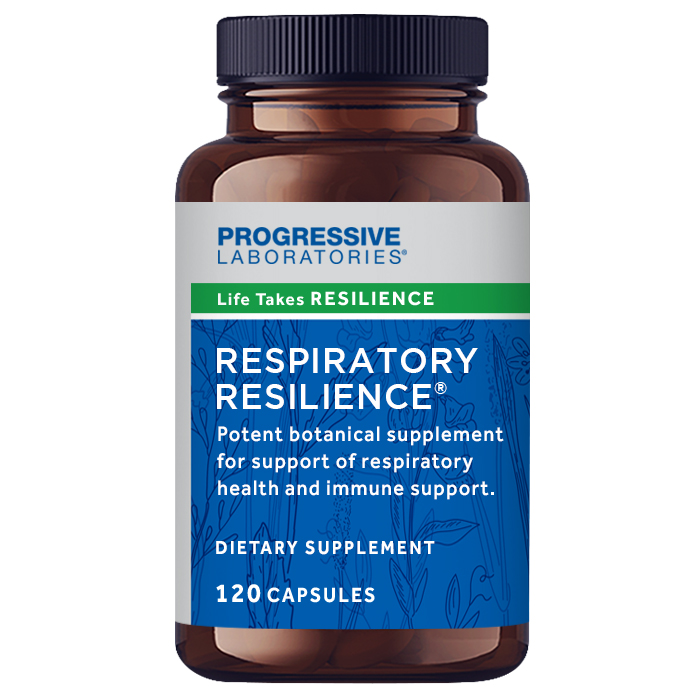
Select any heading below to learn more about this supplement.
Ingredients and formulation
Serving size: 4 capsules
Servings per container: 30
Bottle size: 120 capsules
| Ingredient (per 4 capsules) | Amount | % DV |
|---|---|---|
| Vitamin C (ascorbic acid) | 500 mg | 556% |
| Vitamin D (2,000 IU) | 50 mcg | 250% |
| Zinc (zinc amino acid chelate) | 50 mg | 455% |
| N-Acetyl Cysteine | 600 mg | * |
| Quercetin | 400 mg | * |
| Bromelain (2000 GDU/g) | 300 mg | * |
| Cordyceps extract (Paecilomyces hepiali, mycelia) | 100 mg | * |
| Turmeric root extract | 100 mg | * |
| Dimethylglycine HCl | 80 mg | * |
* Daily Value not established.
Other ingredients: methylcellulose (vegetable capsule), l-leucine.
What this formula supports
Respiratory Resilience brings together nutrients and botanicals traditionally used to support the respiratory system and the body’s own defences.
- Supports healthy lung and airway function. N-acetyl cysteine is a precursor to glutathione, the body’s principal antioxidant in lung tissue.
- Supports the body’s normal inflammatory response. Quercetin, bromelain and turmeric root extract are long-established botanicals in this role.
- Provides antioxidant protection. Vitamin C and zinc help protect cells from oxidative stress.
- Supports normal immune function. Vitamin C, vitamin D and zinc each contribute to the normal function of the immune system.
- Supports stamina and healthy energy metabolism. Cordyceps and dimethylglycine are traditionally used to support endurance and oxygen utilisation.
Research on the key ingredients
The references below describe what published studies have reported about individual ingredients in this formula. They describe the findings of those researchers. They are not statements about what this product does.
Cordyceps
- Preliminary clinical studies and meta-analyses report that Cordyceps sinensis may ease chronic obstructive pulmonary disease symptoms by reducing airway inflammation and oxidative stress.
- Researchers attribute this to bioactive compounds such as cordycepin and polysaccharides, which were observed to decrease inflammatory markers including interleukins and tumour necrosis factor, and to lower reactive oxygen species in lung tissue.
- In preclinical animal and cell models, Cordyceps was observed to limit lung tissue scarring by reducing collagen deposition and transforming growth factor beta 1.
- Some studies indicate improved ATP production and VO2 max, supporting exercise endurance, although findings on peak-exercise oxygen uptake remain mixed.
Turmeric and curcumin
- Curcumin, turmeric’s primary active compound, has been reported to calm inflammatory signalling and lower inflammatory cytokines in the airways.
- Its antioxidant properties were observed to neutralise free radicals and protect lung tissue from damage attributed to cigarette smoke, pollution and environmental toxins.
- Early clinical work in severe COPD reported that nanocurcumin supplementation may improve breathing metrics such as FEV1 and FVC ratios and lower inflammatory markers including IL-6.
- Preclinical studies suggest curcumin can interrupt pathways responsible for excess tissue scarring in pulmonary fibrosis.
References
- Zang Z, Kong Y, Kong Q. Cordyceps sinensis (CS) alleviates chronic obstructive pulmonary disease symptoms (COPD) by targeting inflammation, apoptosis, and oxidative stress through ingredient–gene–disease interaction. Immunity, Inflammation and Disease, December 2025. Read the study
- Chen M, Cheung FW, Chan MH, Hui PK, Ip SP, et al. Protective roles of Cordyceps on lung fibrosis in cellular and rat models. Journal of Ethnopharmacology, September 2012. Read the study
- Moghaddam SJ, Barta P, Mirabolfathinejad SG, Ammar-Aouchiche Z, Garza NT, et al. Curcumin inhibits COPD-like airway inflammation and lung cancer progression in mice. Carcinogenesis, November 2009. PMID 19793800. Read the study
These references are provided for information. Research into an individual ingredient does not establish that this product produces the same result.
Dosage, quantity and administration
Suggested use: 2 capsules once or twice daily, or as directed by your healthcare provider.
Each bottle contains 120 capsules — 30 servings at 4 capsules per serving.
Contraindications
This formula provides 50 mg of zinc per serving. Extended daily use at this level can affect copper status, so discuss long-term use with your healthcare provider.
Bromelain, quercetin and turmeric may affect how the body handles blood-thinning medication. If you are pregnant or nursing, taking prescription medication, or have a diagnosed medical condition, consult your healthcare provider before use.
These statements have not been evaluated by the Food and Drug Administration. This product is not intended to diagnose, treat, cure or prevent any disease. Consult your healthcare provider before beginning any supplement program.
Reviews
There are no reviews yet.